
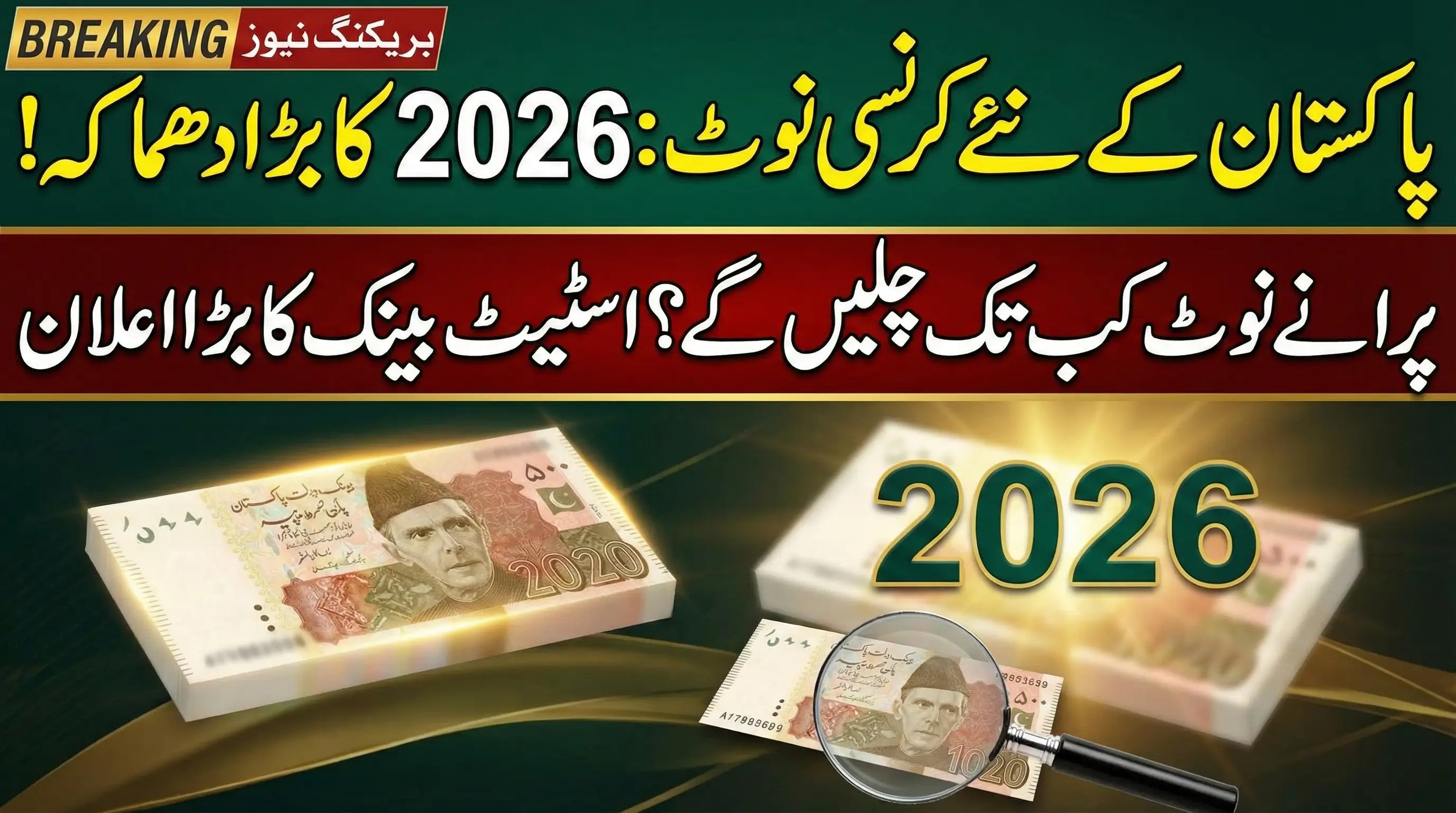
Pakistan Currency Redesign 2026
Pakistan New Currency Notes 2026 is set to introduce a new series of currency notes, marking a significant step in modernizing the nation’s monetary system. The redesign aims to improve both the appearance and security of the notes, ensuring that the currency reflects Pakistan’s cultural identity while being more resilient to counterfeiting.
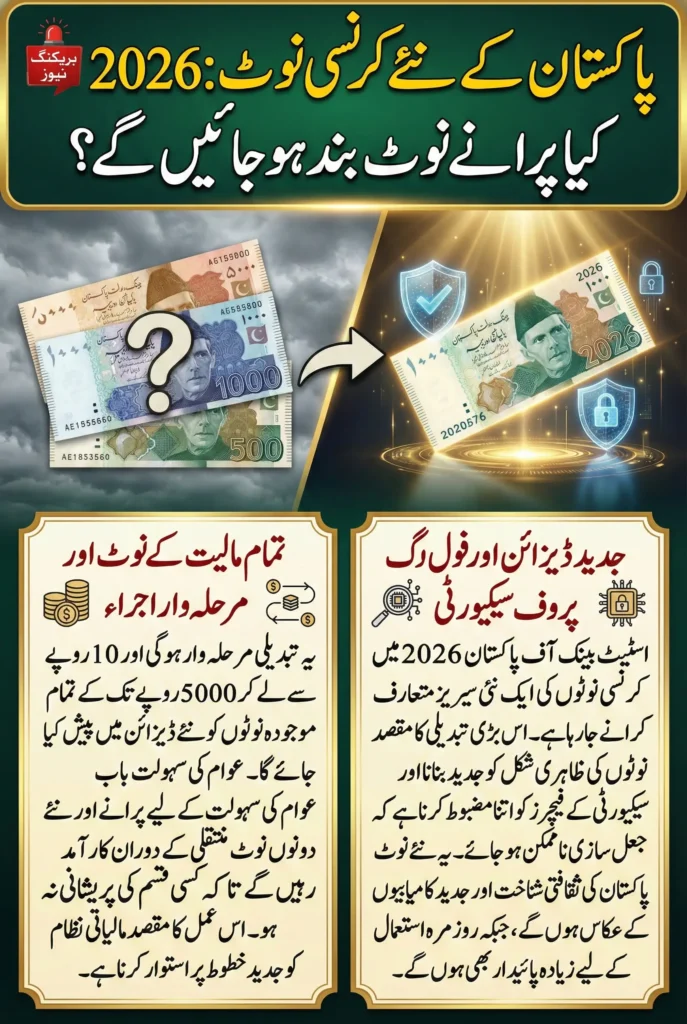
The central bank has emphasized that the update is not just about aesthetics; it also focuses on durability, usability, and easier verification for the public. Citizens can expect a refreshed look for all major denominations, with designs that celebrate national heritage and contemporary achievements.
New Visual Themes and Design
The upcoming currency notes are expected to showcase Pakistan’s rich history, culture, and natural landmarks. Each denomination may feature unique visuals, such as famous monuments, historic figures, and elements representing regional diversity.
The goal is to make each note easily recognizable while promoting national pride. Additionally, the new designs aim to combine modern printing techniques with traditional motifs, creating a balance between innovation and familiarity for daily use.
You Can Also Read : Punjab Ehsaas Rashan Riayat Program
Denominations in the New Series
The redesigned currency series is planned to cover all existing denominations, ensuring continuity in everyday transactions. People will continue to use Rs10, Rs20, Rs50, Rs100, Rs500, Rs1,000, and Rs5,000 notes, but with updated designs and security enhancements. This approach allows citizens to adapt without confusion, as no denominations are being removed or replaced.
- All standard denominations from Rs10 to Rs5,000 will be redesigned.
- Each note will carry distinctive visual themes for easy identification.
- The higher denominations may include additional features to prevent counterfeiting.
Security Features and Durability
One of the main focuses of the new currency notes is improved security. The redesigned series is expected to include advanced features to prevent forgery, making it easier for both banks and the public to authenticate notes.
Enhanced security elements will help maintain trust in the currency while supporting smooth financial transactions. At the same time, the material used in printing will be more durable, allowing notes to last longer even under heavy daily use.
Phased Launch and Availability
The rollout of the new notes is expected to occur in phases throughout 2026. This gradual approach ensures that banks, businesses, and the public can adjust to the changes without disruption.
During the transition, both old and new notes will remain valid, giving people time to get familiar with the updated designs. The central bank will monitor the introduction process to ensure that the distribution is smooth and convenient across all regions of the country.
Public Convenience and Transition
The authorities are committed to making the transition as seamless as possible. Citizens can continue using existing notes for daily transactions while gradually receiving new notes from banks and ATMs.
Public awareness campaigns will likely accompany the launch to educate people about the new designs, security features, and ways to verify authenticity. This ensures that everyone, from urban centers to rural areas, can adapt to the updated currency without confusion.
Conclusion
The 2026 redesign of Pakistan’s currency notes represents a thoughtful modernization of the nation’s monetary system. By combining cultural representation, improved durability, and advanced security features, the new series is designed to serve the public effectively while maintaining trust in the currency.
With a phased launch and coverage of all current denominations, Pakistanis can look forward to using notes that are safer, more visually appealing, and reflective of the country’s rich heritage.