
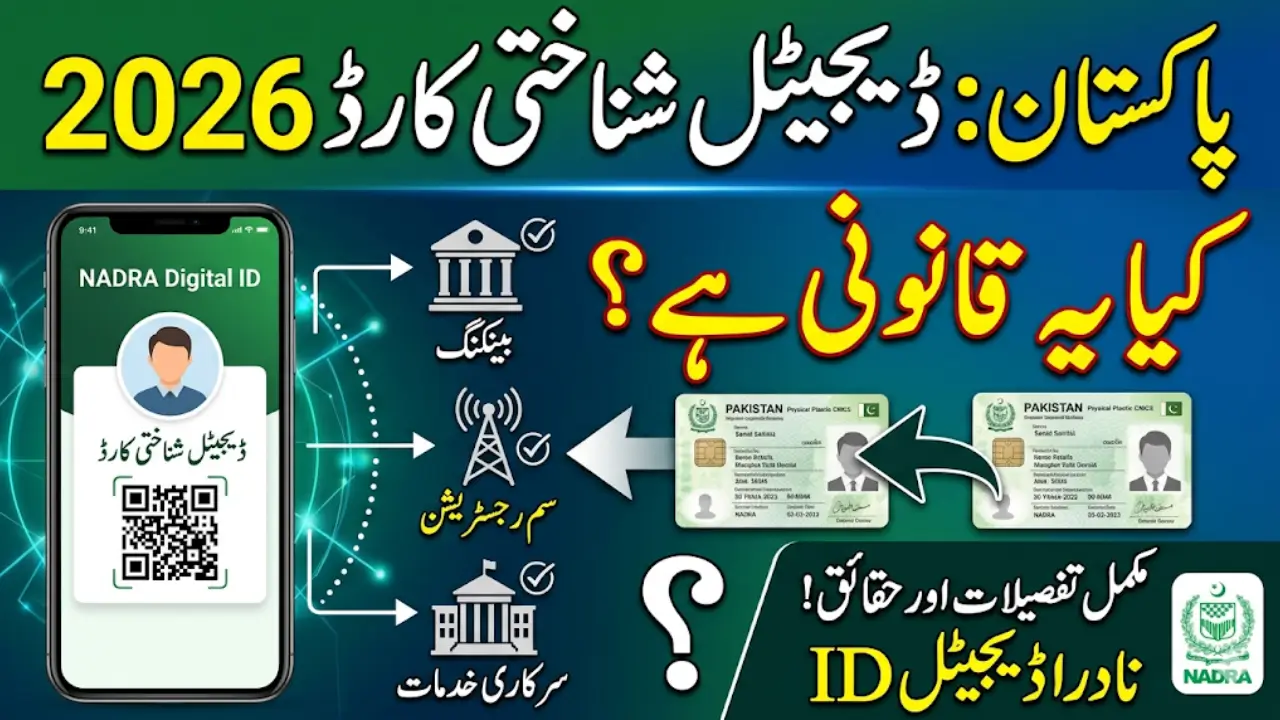
Pakistan is stepping into a new era of digital identity with the introduction of the Digital CNIC in 2026. This innovative approach allows citizens to access a secure, electronic version of their national ID directly on smartphones and other digital devices. Many people are curious: can this digital ID replace the traditional CNIC for official purposes? This article breaks down the key details of the Digital CNIC, its features, and its legal standing.
What is the Digital CNIC?
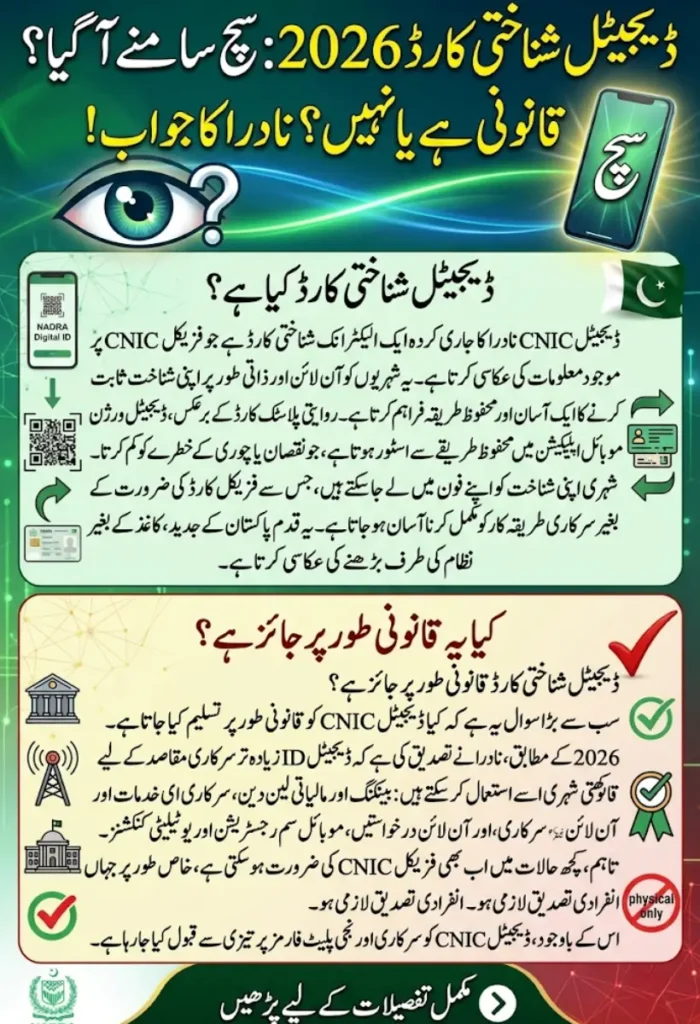
The Digital CNIC is an electronic identity card issued by NADRA that mirrors the information on a physical CNIC. It provides citizens with a convenient and secure way to prove their identity online and in person. Unlike the traditional plastic card, the digital version is stored safely in a mobile application, reducing the risk of loss or theft.
With the digital CNIC, citizens can carry their identity in their phones, making it easier to complete official procedures without needing the physical card. This step reflects Pakistan’s move toward modern, paperless systems for both government and private services.
How the Digital CNIC Works
Once a citizen registers for the Digital CNIC, NADRA verifies their identity using existing CNIC records. The digital ID is then linked to the citizen’s profile in the official NADRA app. Users can access their ID anytime, share their information securely, and verify their identity through QR codes or biometric authentication.
The digital CNIC also enables fast verification for services that require proof of identity, such as opening bank accounts, applying for utilities, or accessing government programs.
You Can Also Read : BISP 8171 Mobile Wallet Payments 2026
Is Digital CNIC Legally Valid?
One of the biggest questions is whether the Digital CNIC is legally recognized. As of 2026, NADRA has confirmed that the digital ID holds legal validity for most official purposes. Citizens can use it for:
- Banking and financial transactions
- Government e-services and online applications
- Mobile SIM registration and utility connections
However, certain situations may still require the physical CNIC, especially where in-person verification is mandatory. Despite this, the digital CNIC is increasingly accepted across official and private platforms.
Key Benefits of the Digital CNIC
The Digital CNIC offers multiple advantages for everyday life. These include:
- Enhanced security, reducing risks of theft or forgery
- Quick and convenient access to official and online services
- Reduced paperwork and easier identity verification
These benefits make it an efficient alternative to the traditional CNIC, particularly for citizens who rely on digital services.
How to Get a Digital CNIC
Obtaining a Digital CNIC is simple. Citizens need to download the official NADRA app, create an account, and complete identity verification using their existing CNIC details. Once the verification is complete, the digital ID is active and ready for official use. It is recommended to enable biometric authentication or PIN codes to keep the account secure.
Security Features of NADRA Digital ID
Security is a priority for the Digital CNIC system. NADRA has implemented multiple layers of protection, including:
- Data encryption to secure personal information
- Biometric authentication to ensure the ID is used only by the owner
- Real-time verification to prevent unauthorized access
These measures ensure that the Digital CNIC is not only convenient but also highly secure for official transactions.
The Future of Digital CNIC in Pakistan
The Digital CNIC marks the beginning of a fully digital identity ecosystem in Pakistan. Over time, it is expected to replace the need for physical CNICs in most scenarios, simplifying processes for both citizens and government offices. As more services adopt digital verification, the digital CNIC is likely to become an essential tool for everyday life.
Conclusion
The Digital CNIC Pakistan 2026 represents a significant shift toward modern, secure, and convenient identity management. Legally recognized for most official purposes, it allows citizens to access services, verify identity, and complete transactions digitally. While physical CNICs are still in use for specific situations, the Digital CNIC is set to become the standard for identity verification, reflecting Pakistan’s digital future.