
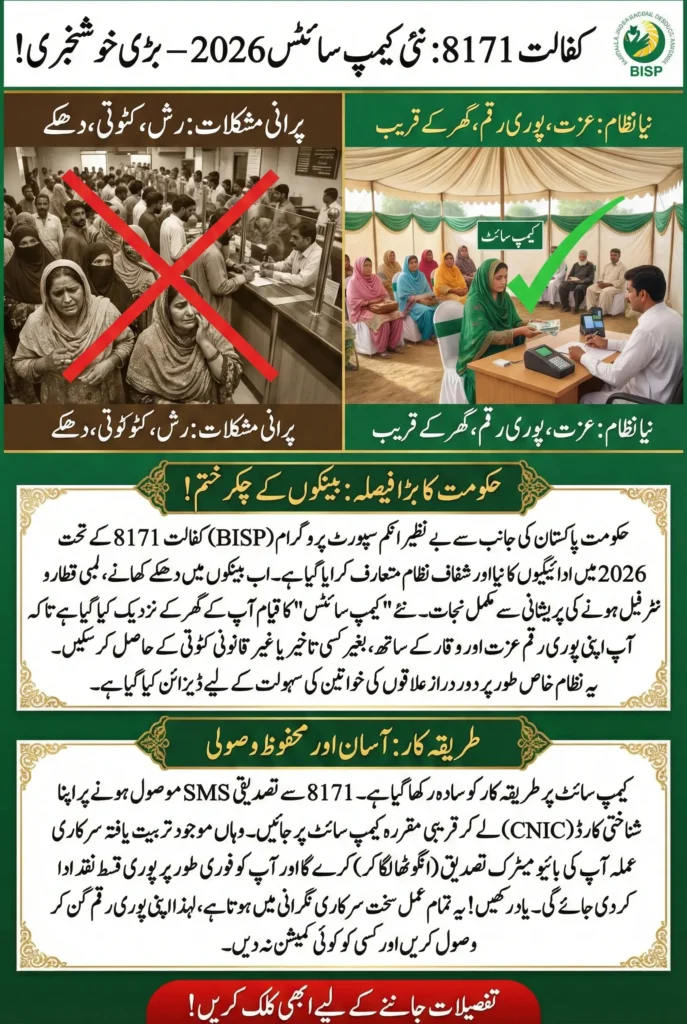
BISP Kafalat 8171 Campsites 2026 continues to refine its payment system to make financial assistance more accessible and transparent for deserving families. In 2026, BISP Kafalat 8171 campsites have been introduced on a wider scale to address long-standing payment challenges faced by beneficiaries, especially in remote and underserved areas. These campsites are designed to bring payment services closer to people while ensuring dignity, safety, and clarity during the disbursement process.
Under the BISP Kafalat initiative, campsites serve as temporary but well-organized payment centers where eligible women can collect their quarterly installments without unnecessary delays or middlemen. The 2026 expansion reflects the government’s intent to reduce complaints, prevent fraud, and improve the overall experience for beneficiaries relying on the 8171 system.
What Are BISP Kafalat 8171 Campsites
BISP Kafalat 8171 campsites are officially approved locations set up for a limited period to distribute payments directly to registered beneficiaries. Unlike permanent banks or franchise shops, these campsites operate under strict supervision of BISP officials, district administration, and partner banks. The purpose is to manage large crowds efficiently and ensure payments reach the right individuals.
These campsites are usually established in schools, community halls, or open government spaces where facilities like seating, shade, and security can be arranged. Each campsite follows a standardized process so that beneficiaries across different districts receive the same level of service.
You Can Also Read : 8171 Check Online CNIC Status Online
Purpose Behind Campsite-Based Payments
The primary purpose of launching campsites is to solve issues that many beneficiaries faced at bank branches or retail agents. Overcrowding, biometric failures, and unauthorized deductions were common complaints in earlier payment models. Campsites aim to restore trust by offering a controlled and transparent environment.
Another important objective is inclusion. Many women enrolled in the Kafalat program live far from banks or lack familiarity with digital payment systems. Campsites reduce travel costs and provide on-site guidance, making it easier for first-time recipients to collect their payments confidently.
Complete Payment Process at Campsites
The payment process at BISP Kafalat 8171 campsites is kept simple so beneficiaries can complete it without confusion. Once the payment phase is announced, eligible women receive confirmation through the 8171 SMS service or local BISP offices. They are informed about the nearest campsite and required documents.
At the campsite, the process usually includes identity verification, biometric authentication, and payment disbursement. Trained staff are present to assist beneficiaries at each step, ensuring that payments are made fairly and without deductions.
Key stages of the campsite payment process include:
- CNIC verification and biometric thumb impression to confirm eligibility
- On-site confirmation of payment amount under the Kafalat program
- Immediate cash disbursement with a receipt or acknowledgment
You Can Also Read : 8171 Ehsaas Program Status Check Balance
Documents Required for Payment Collection
To avoid delays, beneficiaries must bring valid documents when visiting a campsite. The most important requirement is an original CNIC that matches the BISP registration record. Expired or blocked CNICs can cause payment issues, so beneficiaries are advised to update their records beforehand.
In some cases, additional verification may be required if biometric data does not match. Campsite staff guide beneficiaries on what steps to take next, including referrals to NADRA or BISP tehsil offices if updates are needed.
Who Is Eligible to Receive Payment at Campsites
Only women who are approved under the BISP Kafalat program and have received payment confirmation are eligible to collect funds from campsites. Beneficiaries whose payments are on hold due to verification issues may not be able to receive cash until their status is cleared.
Eligibility is determined through the National Socio-Economic Registry and PMT score assessment. If a beneficiary’s status is active and payment is released, she can visit the assigned campsite during the announced dates.
Benefits of Campsites for Beneficiaries
Campsites offer several practical benefits that improve the overall payment experience. They reduce dependency on private agents and minimize chances of exploitation. Beneficiaries also feel more secure receiving payments in a government-managed environment.
Some key advantages include:
- Reduced travel distance and lower transportation costs
- Better crowd management and organized payment flow
- Direct oversight by BISP officials to prevent deductions
Conclusion
BISP Kafalat 8171 campsites in 2026 represent a significant step toward a fairer and more efficient payment system. By bringing services closer to beneficiaries and ensuring transparent procedures, these campsites help restore confidence in the program and protect the rights of deserving families.
For women relying on Kafalat support, understanding the purpose and payment process of campsites can make the experience smoother and stress-free. As the program continues to evolve, campsite-based payments are likely to remain a vital tool in delivering financial assistance with dignity and accountability.