Green Tractor Scheme Overview
Green Tractor Scheme Requirements has become a key government initiative aimed at empowering farmers and boosting agricultural productivity. In many countries, particularly where farming is central to the economy, this scheme helps small and medium landholders access modern tractors at subsidized rates. Instead of waiting years to save money or borrow at high interest, farmers can now afford tractors that improve efficiency and reduce labor costs. However, before applying, it’s essential to clearly understand the requirements and eligibility criteria so you don’t waste time or resources pursuing something you may not qualify for.
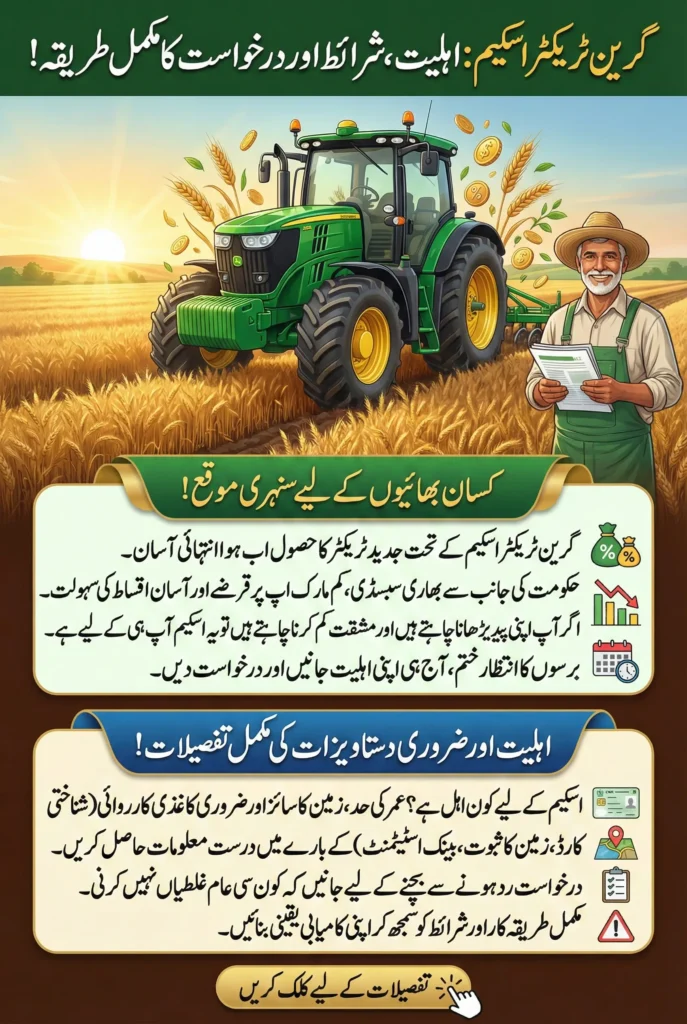
The motivation behind the Green Tractor Scheme is straightforward: support agriculture, increase crop yields, and modernize farming methods. Tractors under this scheme often come with financial support such as reduced interest financing, installment plans, or direct subsidies. These benefits are designed to make ownership easier for those who genuinely need the equipment for productive work. Yet confusion grows when applicants don’t know what documentation, landholding status, or age restrictions are involved. The following sections break everything down in a clear, practical way.
Green Tractor Eligibility Criteria Farmers Must Know
To qualify for the Green Tractor Scheme, applicants typically need to meet specific farmer eligibility criteria set by the governing authority or agricultural department. This includes proving that you are actively engaged in farming and that the tractor will be used for agricultural purposes, not commercial hauling or rental. Most programs also impose age limits to ensure the equipment goes to active laborers rather than passively held by someone not involved in farming.
Documentation standards vary, but the fundamental idea remains the same: the scheme should benefit genuine farmers. Therefore, you’ll often be asked to show proof of income from farming, tax records, crop history, and sometimes even land usage details confirmed by local authorities. It’s always best to gather and verify all paperwork before submission to avoid rejection due to missing information.
Key Document Requirements for Green Tractor Scheme
When applying for the Green Tractor Scheme, documentation plays a huge role in verifying eligibility. The exact list can vary by region, but certain documents are universally required. Ensure that every document is valid, current, and officially recognized. Missing or expired paperwork is one of the top reasons applications get delayed or denied.
Important supporting documents usually include:
- A valid national identity card or farmer registration number issued by the agricultural authority
- Land ownership proof or lease agreement showing active farming land
- Bank statements, tax records, or income certificates indicating agricultural income
In addition to these, some programs may require local authority verification letters or specific farm census documents. Always check the checklist provided by the relevant department to avoid oversights.
You Can Also Read : Green Tractor Scheme Phase 3 Result Check
Financial Requirements and Subsidy Details
One of the biggest questions farmers ask about the Green Tractor Scheme is the financial burden and subsidy amount. While the idea is to make tractors affordable, it doesn’t always mean free equipment. Most programs offer partial financing or subsidies that reduce the upfront cost. Some governments work with banks to provide low-interest loans where the subsidy either lowers the interest rate or a percentage of the total cost is covered.
For example:
- Subsidy percentages may range from 30% to 50% of the tractor’s cost depending on policy priorities.
- Low-interest financing from partner banks may charge lower rates than standard agricultural loans.
- Repayment terms can be extended over several years to ease cash flow pressure on farmers.
Understanding these financial details helps applicants plan better and know exactly how much they must pay versus what support they will receive.
Age and Landholding Criteria Explained Clearly
Age and landholding size are critical parts of the Green Tractor Scheme requirements. Typically, applicants must be adults actively involved in farming, often between certain age brackets such as 18 to 65 years. Some programs exclude very large landholders to ensure that benefits go to small and marginal farmers, who are most in need of mechanization assistance.
Required criteria may include:
- Minimum and maximum age limits for eligibility
- Defined landholding size thresholds (e.g., farms under a certain acreage)
- Proof of active farming to prevent misuse of the scheme
You Can Also Read : Green Tractor Scheme Phase 3
These conditions ensure that the program targets those who genuinely need tractor support to improve productivity.
How to Apply for Green Tractor Scheme Efficiently
Applying for the Green Tractor Scheme does not have to be intimidating. Many agricultural departments now offer online application portals where you can upload documents, check eligibility, and track application status. Others still use local agricultural offices where you can submit paperwork and get help with filling forms.
Before applying:
- Review all requirements carefully
- Prepare photocopies of all required documents
- Visit the official government portal or local agricultural extension office
It’s also worth speaking with other farmers who have successfully obtained tractors under the scheme; they often provide practical tips that go beyond written instructions.
Common Application Mistakes to Avoid
Even with eligibility, many applications fail due to simple mistakes or misunderstandings about the requirements and criteria. Common issues involve incomplete documentation, incorrect land records, or missing proof of agricultural activity. Taking time to double-check each item before submission can save weeks of delays.
Conclusion
The Green Tractor Scheme presents a valuable opportunity for farmers to enhance their operations with modern equipment. By understanding the requirements and eligibility criteria, preparing accurate documentation, and knowing the financial support available, you can increase your chances of approval and take a significant step toward more productive farming.