
9999 Online CNIC Check
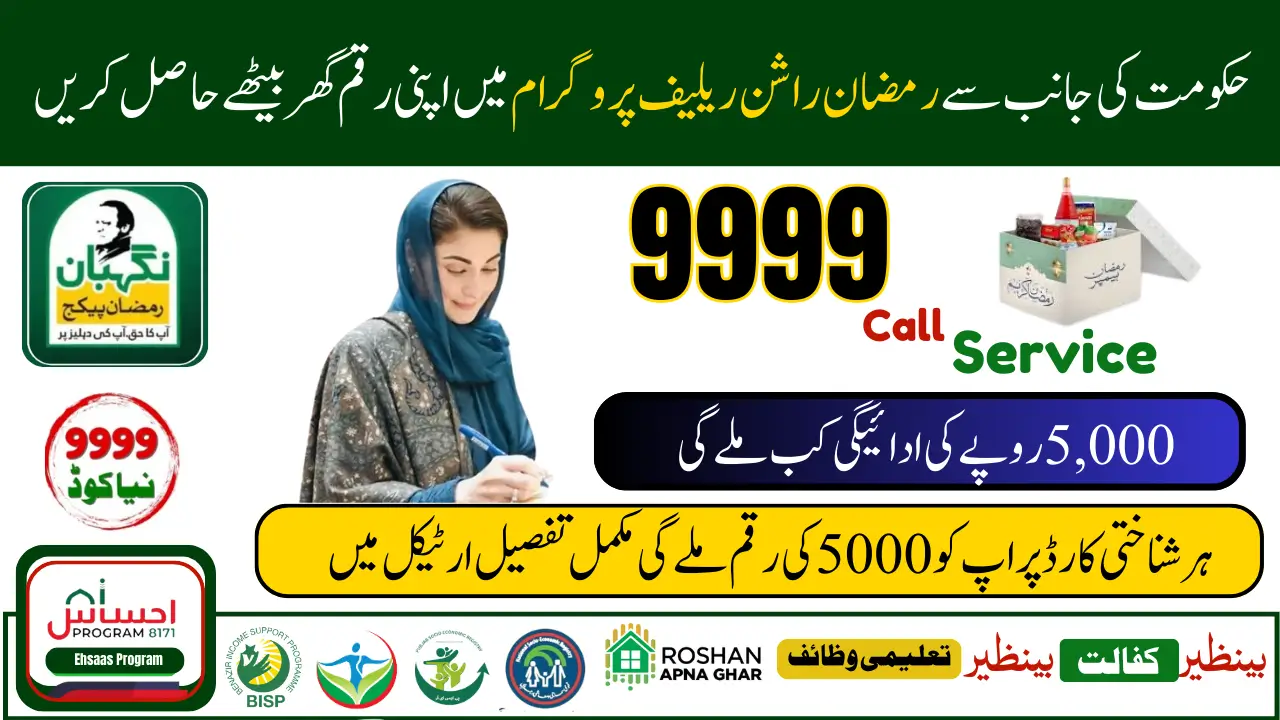
Government of Pakistan has continued its welfare initiatives by launching the Ramzan Relief Package 2026 to support low-income families during the holy month of Ramzan. Due to rising inflation and increasing living costs, many households struggle to afford basic food items. To address this challenge, the government has introduced an easy and transparent system known as the 9999 Online CNIC Check, allowing citizens to verify their eligibility using their CNIC number through SMS.
This updated guide explains the complete eligibility check method, purpose of the program, covered food items, and how beneficiaries can collect subsidized rations without hassle.
Purpose of the Ramzan Relief Package 2026
Ramzan is a sacred month focused on patience, charity, and unity. However, for many families in Pakistan, financial pressure makes it difficult to meet daily food needs. The Ramzan Relief Package 2026 has been designed to reduce this burden by offering essential food items at subsidized rates.
The core objective of this program is to ensure food security for deserving households so they can observe Ramzan with dignity and peace of mind. By targeting the most vulnerable segments of society, the government aims to promote social welfare and economic relief during this important time.
9999 Online CNIC Check for Eligibility
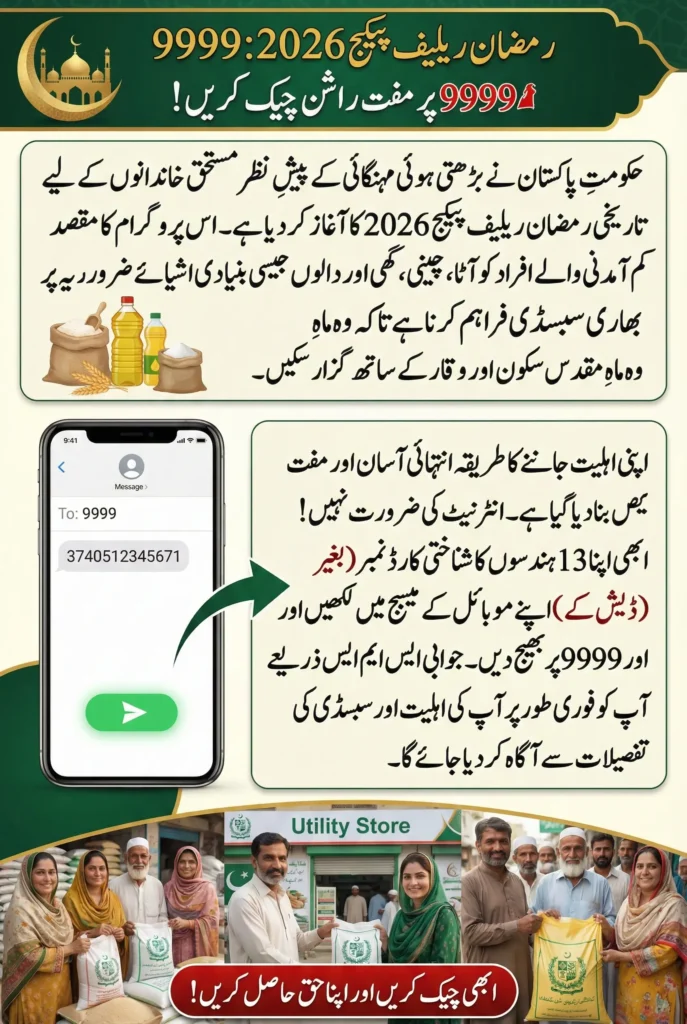
To make the process simple and accessible for everyone, the government has introduced an SMS-based verification system that does not require internet access. Any citizen can check eligibility by following these steps:
- Open the SMS or messaging app on your mobile phone
- Type your 13-digit CNIC number (without spaces or dashes)
- Send the message to 9999
- Wait for the confirmation message regarding your eligibility status
This system ensures transparency and prevents misuse by allowing only verified and deserving individuals to receive subsidies.
Who Is Eligible for the Ramzan Relief Package?
The government has set clear eligibility criteria to ensure fair distribution. Priority is given to families who genuinely need financial support. Eligible groups include:
- Low-income families earning below the government-defined threshold
- Widows with no stable source of income
- Senior citizens without financial support
- Persons with disabilities unable to work
- Daily wage laborers affected by inflation
- Beneficiaries already registered in programs like BISP or Ehsaas
If your CNIC is already part of a government welfare database, your chances of eligibility are higher.
Essential Food Items Included in the Package
Under the Ramzan Relief Package 2026, eligible beneficiaries can purchase basic food items at subsidized prices. These commonly include:
- Wheat flour
- Sugar
- Rice
- Cooking oil or ghee
- Pulses (daal)
- Tea
These items are supplied through Utility Stores and authorized distribution centers, ensuring consistent availability throughout Ramzan.
You Can Also Read : BISP Debit Card Payment Centers ATM Procedure (
How to Collect Subsidized Rashan
Once your eligibility is confirmed through the 9999 SMS service, you can collect your subsidized items by following this process:
- Visit the nearest authorized Utility Store or distribution center
- Carry your original CNIC with you
- Provide your CNIC number to the store representative
- Your details will be verified in the official database
- After verification, you can purchase the subsidized food items
This verification process helps prevent duplication and ensures that assistance reaches the right people.
You Can Also read : Benazir Income Support 8171
Alternative Ways to Check Eligibility
If you face any difficulty using the 9999 SMS service, you can explore other verification options:
- Visit the official government portal related to the Ramzan Relief Package
- Contact the local administration or Union Council office
- Call the official helpline for guidance
- Visit a Utility Store for in-person CNIC verification
These methods ensure that no deserving family is left out due to technical issues.
Common Problems and Practical Solutions
Some applicants may encounter issues during eligibility checks or item collection. Common problems and their solutions include:
- Incorrect CNIC entry: Always enter the full 13-digit CNIC without spaces
- Delayed SMS response: Network congestion can cause delays; resend after some time
- CNIC not found: Visit a government office for manual verification
- Stock unavailability: Utility stores receive regular supplies; check again later
Following these steps can resolve most issues quickly.
Government Measures for Transparency
To ensure fairness, the government has implemented digital CNIC verification and monitoring systems. Authorities regularly inspect Utility Stores to prevent hoarding, black marketing, and favoritism. Any complaints of misuse are investigated strictly, ensuring transparency in the distribution process.
You Can Also Read : CM Punjab Announces Green Tractor Scheme 2026
Impact of the Ramzan Relief Package
The Ramzan Relief Package 2026 has a positive social and economic impact. It reduces food insecurity, supports low-income families, and allows people to focus on worship rather than financial stress. The initiative also strengthens trust between citizens and the government by delivering timely relief.
Future Improvements Suggested
To make the program even more effective, the government may consider:
- Expanding coverage to include more struggling households
- Increasing the number of Utility Stores in rural areas
- Introducing digital payment or card-based systems
- Providing home delivery for elderly and disabled beneficiaries
Such improvements can further enhance accessibility and efficiency.
Conclusion
The 9999 Online CNIC Check for Ramzan Relief Package 2026 is a practical and transparent initiative by the Government of Pakistan. By offering essential food items at subsidized rates, the program provides real relief to low-income families during Ramzan.
Eligible citizens are encouraged to check their status using the simple SMS method and benefit from this support. This welfare initiative reflects the government’s commitment to social protection, economic stability, and public well-being during challenging times.