
8171 Payment SIM Verification in Pakistan has become a lifeline for millions of low-income families, and in 2026 the process is being further improved through SIM verification and wallet-based payments. These changes aim to reduce fraud, ensure transparency, and make it easier for beneficiaries to receive their funds without long queues or repeated visits. Understanding how SIM verification and wallet accounts work together is now essential for anyone enrolled in the 8171 program.
In recent years, payment delays and identity issues caused frustration among beneficiaries. To address these problems, authorities introduced a stricter verification system linked directly to a registered mobile SIM and a digital wallet. This approach ensures that payments reach the right person at the right time, while also promoting financial inclusion through mobile-based accounts.
What Is 8171 SIM Verification
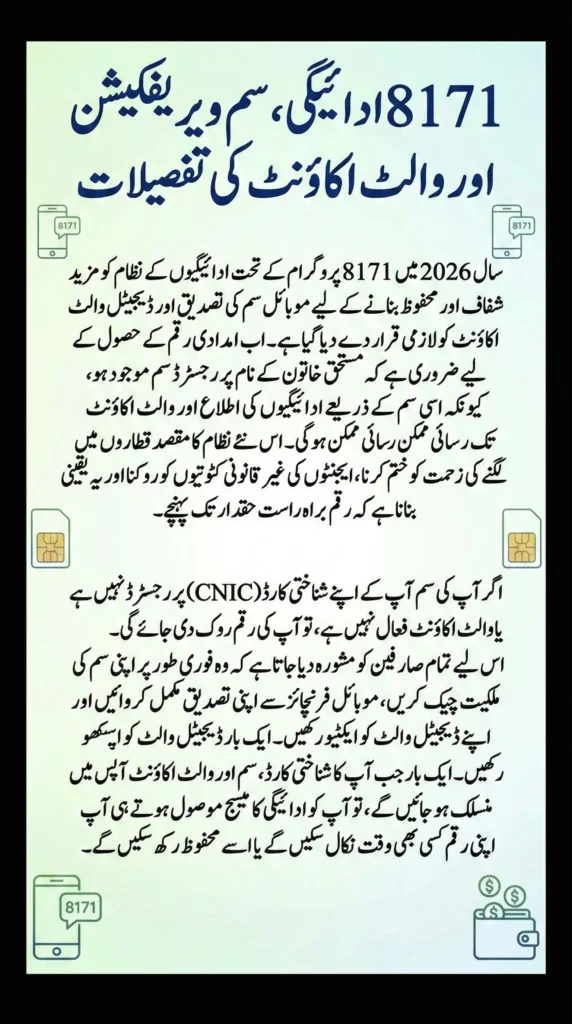
SIM verification under the 8171 program means that the mobile number used for payment alerts and wallet access must be registered in the beneficiary’s own CNIC. This step confirms identity and prevents misuse of funds. If the SIM is not verified or is registered under another person’s name, payments may be delayed or blocked until the issue is resolved.
The verification process is designed to be simple but strict. It connects the beneficiary’s CNIC, mobile number, and wallet account into one secure system. Once verified, the beneficiary receives official messages about payment status, amounts, and collection timelines directly on their phone.
For More Informatioon : 8171 Web Portal 2026 Check Your CNIC
Why Wallet Accounts Are Mandatory in 2026
In 2026, wallet accounts have become the preferred payment method for 8171 beneficiaries. Instead of cash collection from centers, funds are transferred directly into a mobile wallet linked to the verified SIM. This shift reduces travel costs, saves time, and minimizes the risk of deductions or agent misconduct.
Wallet accounts also allow beneficiaries to manage their money more independently. Funds can be withdrawn when needed, transferred to family members, or used for basic digital transactions. This system supports transparency and gives users better control over their financial assistance.
How SIM and Wallet Linking Works
The SIM and wallet linking process ensures that only eligible individuals can access their payments. The system checks CNIC data, mobile registration, and wallet details before approving any transaction. If all records match, payments are released smoothly.
Key advantages of proper linking include:
- Faster payment release without repeated verification
- Reduced chances of payment suspension or errors
- Secure access to funds through a personal wallet
Common SIM Verification Problems
Despite improvements, some beneficiaries still face SIM-related issues. These problems usually arise due to outdated CNIC records, inactive SIMs, or numbers registered under relatives’ names. Such mismatches can stop payments until corrected.
Common issues reported by users include delayed SMS alerts, wallet access restrictions, and temporary payment holds. Most of these problems can be resolved by updating SIM ownership or re-verifying information through official channels.
You Can Also Read : BISP January 2026 Payment
How to Fix SIM or Wallet Issues
Resolving SIM or wallet issues is possible with timely action. Beneficiaries are advised to ensure their mobile number is active and registered on their own CNIC. Updating records early helps avoid payment delays during scheduled disbursements.
Important steps include:
- Visiting a mobile franchise to transfer SIM ownership if needed
- Updating CNIC details to match wallet records
- Confirming wallet activation before payment cycles
Payment Timeline and Alerts in 2026
Once SIM verification and wallet linking are complete, beneficiaries receive regular updates about payments. SMS alerts provide information on payment approval, transfer dates, and available balance. This system keeps users informed and reduces uncertainty.
Payments are released according to official schedules, and verified users typically receive funds without interruption. Keeping the SIM active and wallet functional is crucial to continue receiving timely alerts and transfers.
Conclusion
The 8171 payment SIM verification and wallet account system in 2026 marks a major step toward secure and transparent financial assistance in Pakistan. By linking CNIC, SIM, and wallet details, the program ensures that support reaches deserving families efficiently.
Beneficiaries who keep their information updated and follow verification guidelines can expect smoother payments and greater control over their funds. As digital payments expand, this system not only improves delivery but also empowers users with safer and more reliable access to financial aid.